What mat Pilates is
In a mat session you work on a mat, usually lying down, sitting, or supporting yourself on your hands and feet. The load is your own weight and the way you coordinate it. Small equipment such as a ball, ring, or band sometimes makes an exercise clearer. Those props are optional tools, not a different method.
“What is mat Pilates?” comes up next to “floor Pilates” and “Pilates mat class.” On this site they point to the same idea: instructor-led work on a mat, as distinct from reformer work.
What the session emphasizes
A typical mat class moves from a starting position you can hold, into exercises for the abdomen, hips, back, and shoulders, and back to something quieter. The teaching points are usually the same: ribs and pelvis related to each other, legs organized without gripping, neck left long enough to repeat the movement.
People practice mat Pilates for control, mobility, and a stronger sense of how the trunk supports the limbs. Those are reasonable aims. They are not medical outcomes, and a class will not be described here as a treatment for a diagnosis.
How mat work differs from the reformer
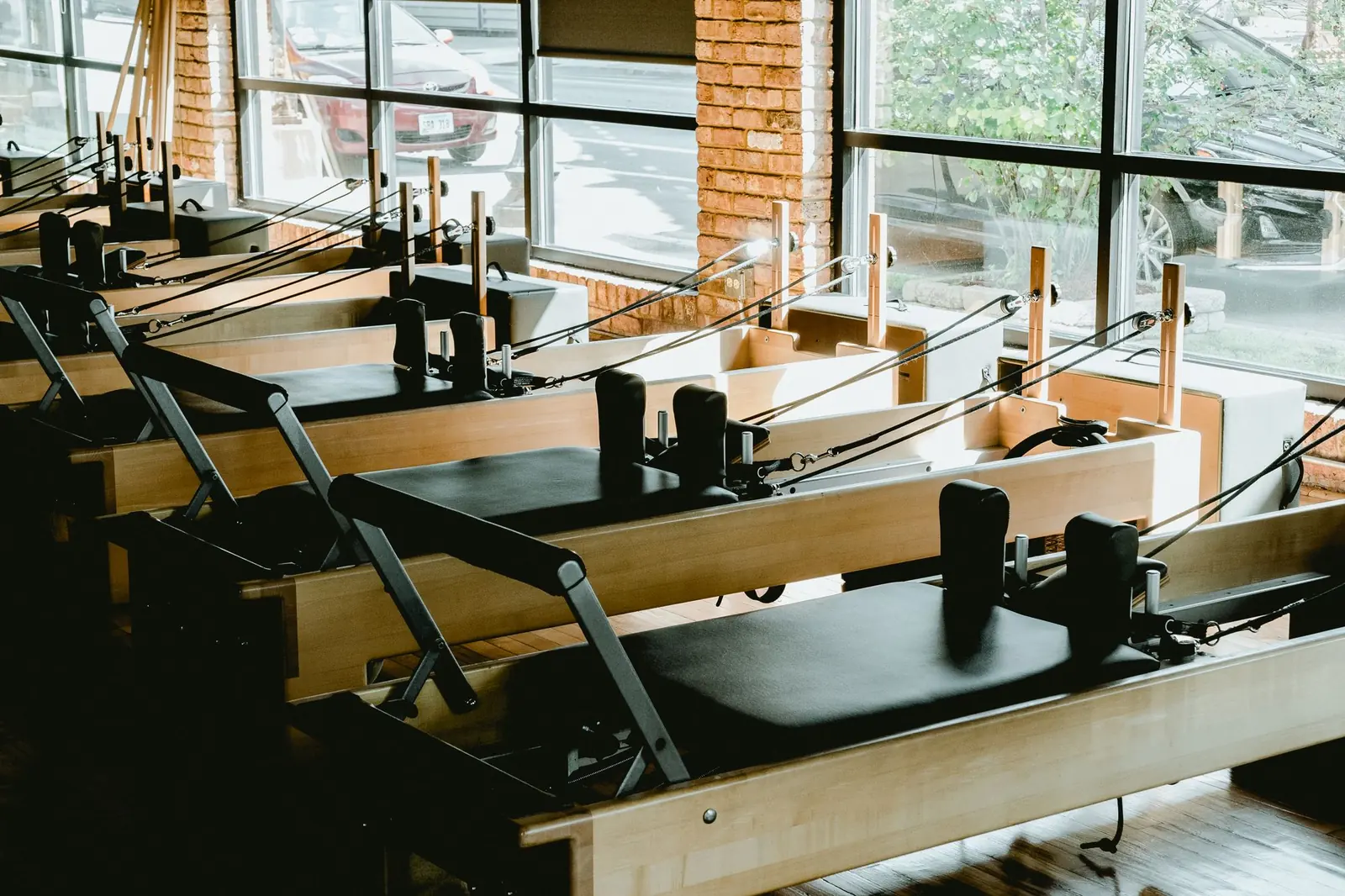
On the reformer, the carriage and springs give you feedback and a way to scale the load. On the mat, that feedback has to come from the instructor’s cue and from what you can feel. Some beginners prefer that simplicity. Others prefer the reformer because the machine makes the path of the movement obvious.
Mat work is not a lesser version. A precise mat exercise can be more demanding than a supported reformer exercise. If you are deciding between them, read the reformer comparison and then pick the room you want to be in. You can also ask to try the format you are less sure about and change later.
Levels
A newer student gets fewer variations and more time on the setup. Someone who already knows the classical order can be given a fuller sequence. Tell us which of those describes you when you write. If you are brand new, start with the beginner page.
Getting ready
Wear clothing you can lie down and roll in. Very loose fabric makes it harder to see alignment, and very slippery fabric makes some seated work awkward. Bare feet are common on a mat. Grip socks are more often a reformer question, but the floor and the studio’s preference can differ. Ask before you come.
Bring water if you like. Leave large jewelry that catches on the mat at home. You do not need shoes for the mat work itself.
Private mat or group mat
A private mat session leaves room for questions and for repeating one exercise until it makes sense. A group mat class follows a shared plan. Tell us what you want, and the reply covers time and price.
Use the pricing explanation if you want to know why formats are priced differently, then ask for the number that applies now.
Mat questions
No. The two methods sometimes share a mat and a calm pace. The exercise order, the cues, and the aim of the shapes are not the same. A Xekuta mat session is taught as Pilates.
Often, no. Bare feet are common. Ask when you book whether this studio wants socks for the session you chose. Reformer classes are more likely to ask for grip socks.
It is useful for the same qualities: control, strength, and mobility. The reformer adds equipment. Usefulness depends on whether you practice, not on which photo looks more elaborate.
None, if you are willing to learn the setup. Say that you are new. If you already take mat classes elsewhere, say that too, so the session is not pitched below what you can do.
No. It saves your question. A place exists only after the studio confirms a time with you.
Why the mat is a full practice.
Mat Pilates is not the leftover version of the reformer. It is the method on a stable surface, where the resistance is your own weight and the precision of the shape. A well taught mat exercise can be more demanding than a supported carriage exercise, because nothing rolls you back into place. The instructor’s eye matters just as much: the position of the ribs, the path of the leg, the moment you hold your breath and need to be reminded to let it out.
Daniel Brooks includes mat work in the same teaching style he uses on the reformer. Mindful movement, clear technique, and progress that belongs to the person in the session, not to a posted ranking. A newer student gets fewer variations and more time on the setup. Someone who already knows the order can be given a fuller sequence. Tell him which of those you are when you write.
Wear clothes you can lie down and roll in. Bare feet are common. Ask about the studio’s preference before you come, especially if you also hope to try the reformer in the same chapter of your practice. Then request the mat session you actually want, private or group, and ask for the current time and rate.
If you already practice on a reformer and want the mat as a second language, say so. The session can translate what you know instead of starting as if the method were new. Ask for the rate of the mat hour you want, private or group, when you contact the studio.