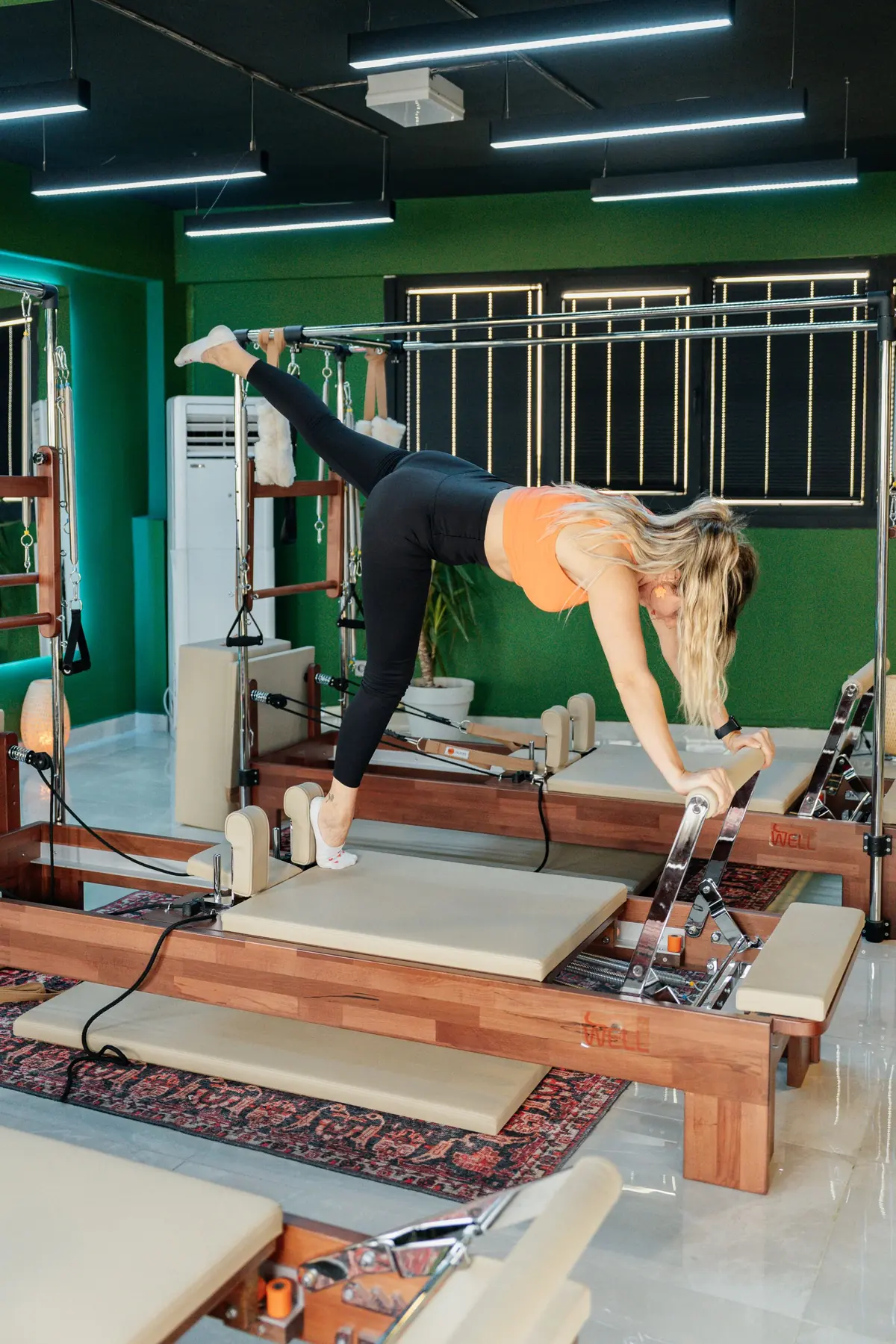
What reformer Pilates is
A reformer is a framed bed with a sliding carriage, springs, straps, a footbar, and shoulder rests. Joseph Pilates built the apparatus so a person could train strength and control with adjustable load. A modern studio reformer is the same idea: the carriage moves, and you decide how much spring to use.
“What is reformer Pilates?” is usually a question about that setup, not about a different method. The exercises still ask for a steady trunk, a clear line through the legs or arms, and a pace you can repeat.
How the equipment is used
Footwork is often first. Your feet meet the bar, the carriage travels, and the springs tell you whether you are pushing evenly. Straps can support the legs or load the arms. Short boxes and jumpboards exist on many reformers; whether a given session uses them depends on the plan, not on a promise from this page.
Springs are not a score. Heavier is not more advanced. The useful spring is the one that lets you keep the shape of the exercise.
How a reformer session feels
You will be asked to set your feet, head, and hands before you move. The carriage should travel smoothly. If it chatters or you grip the rests, the usual correction is to change the setup, not to push harder.
People often use reformer work for strength, hip and shoulder mobility, and a more precise sense of alignment. That is a reason to practice. It is not a guarantee of a medical result, and it is not a claim that reformer training replaces strength work you already do. It can sit beside other training. It is not automatic credit for a different program.
Reformer and mat, compared
Mat Pilates asks you to organize your body on a stable surface. The reformer adds a moving surface and springs. Some people feel the work more clearly with that feedback. Others prefer the mat because there is less equipment between them and the exercise.
Neither format is universally harder. A demanding mat exercise can be more difficult than a supported reformer exercise, and the reverse is also true. If you are choosing, pick the setting you will actually attend. Read the mat page if you want the other side in more detail.
If you are new to the reformer
You do not need to arrive knowing the parts by name. A first session should show you how to get on, where the straps are, and how to stop the carriage. Wear fitted clothing you can move in, and ask whether grip socks are expected. Many reformer classes ask for them because the carriage is smooth. Confirm that when you inquire rather than assuming a rule.
Say if you want a private hour or a group class. Private time is easier if you have a lot of questions. A group is reasonable once you can follow a shared plan. Beginners can start in either, and the beginner page covers clothing and first-class questions.
Choosing a format
Ask yourself three things: do you want the carriage, do you want the hour to yourself, and are you comfortable learning in a group? Then request that combination. The reply to your inquiry is where availability and the current rate belong.
Reformer questions
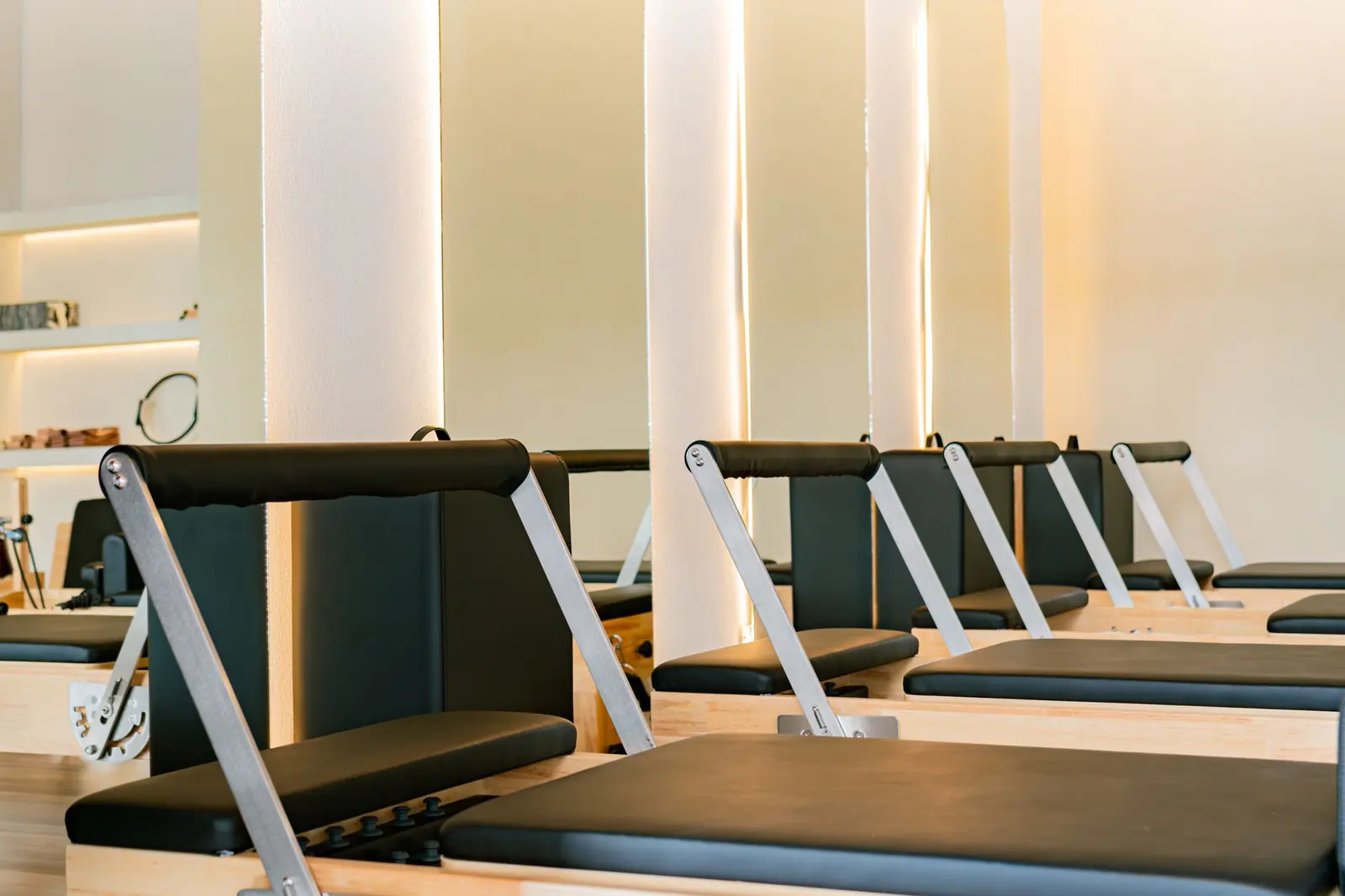
It is the apparatus: a sliding carriage, springs, straps, a footbar, and shoulder rests. Reformer Pilates is the method taught on that equipment.
Not as a rule. Springs can support you or load you. Difficulty comes from the exercise and the pace, not from the machine alone.
Time spent on setup, slower repetitions, and cues about feet, ribs, and the path of the carriage. You should leave knowing how to get on and off safely.
There is no required weekly number. Many people start with one session a week while they learn the equipment, then decide whether a second session is useful. More visits do not guarantee a visible change.
What the carriage is asking you to do.
A reformer rewards patience. The carriage should slide without a fight, the straps should stay even, and the springs should match the exercise rather than your pride. If the movement chatters or you grip the shoulder rests, the usual correction is a smaller range or a different spring, not more effort. Daniel Brooks teaches this equipment with that kind of attention: proper technique first, then the range, then the pace.
In a typical hour you will set your feet, your head, and your hands before anything travels. Footwork often opens the session because it teaches the path of the carriage while you are supported. Trunk and hip work follow. Straps may come in for the arms or the legs once the setup is familiar. None of that sequence is a secret syllabus. It is the ordinary order of a method that wants the joints organized before the load increases.
If you are deciding between this page and the mat, ask which room you will actually return to. The reformer is a good teacher when you like feedback. The mat is a good teacher when you want fewer objects. Both are Pilates. You can request either, or you can ask Daniel which he would start you on.
Bring one question with you, not a list of injuries. A useful question is about the setup: where the feet belong, how far the carriage should travel, or whether grip socks are expected. Daniel would rather answer that than watch you guess for the whole hour.
Then send the request, and ask for the rate of the reformer hour you described.